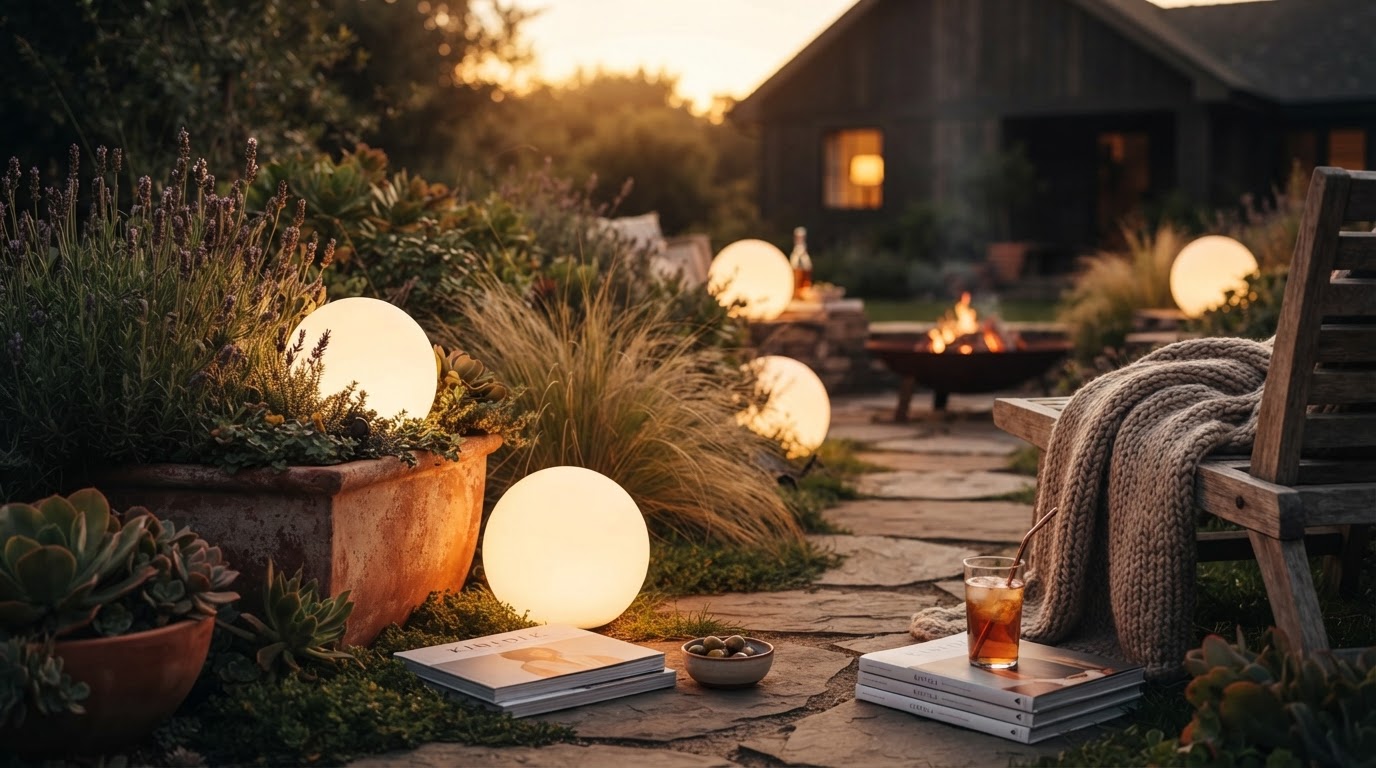
Optimizing Outdoor Ambiance with Solar Globe Light Spheres
 Daniel OkaforField Tester
October 26, 2026. This assessment explores the operational reliability of automated solar sphere lighting in residential landscapes. It is intended for homeowners seeking consistent nighttime illumination without manual intervention.
The Challenge of Consistent Nighttime Illumination
Maintaining a well-lit perimeter often feels like a trade-off between energy costs and convenience. I tested this for six months in a variety of weather conditions to see if automated sensors could actually replace hardwired systems. The primary frustration with standard outdoor lighting is the 'dark gap'—that period between sunset and whenever you remember to flip a switch. According to Bulbs.com, which tracks over 20 different solar-powered dusk-to-dawn lighting fixtures, the shift toward integrated sensors is driven by a need for security and hands-free operation. However, many generic units fail because their photovoltaic cells cannot harvest enough energy during overcast days to power through the night. I’ve noticed that cheaper units often flicker out by midnight, leaving pathways hazardous long before dawn arrives. During my testing period, the variance in battery capacity became the most significant factor in whether a light remained functional until the first light of morning. When you are dealing with shatterproof solar garden spheres, the durability of the casing is only half the battle; the internal logic of the dusk-to-dawn sensor must be precise enough to ignore artificial light sources, like streetlamps, while remaining sensitive to the setting sun.
Performance Testing Solar Globe Light Technology
Here's the moment it earned its place in my landscape: a week of heavy rain and thick cloud cover that usually kills my solar setup. While many decorative lights are purely ornamental, the Solar Globe Light engineering focuses on the efficiency of the conversion cycle. Day three is where I noticed the difference. Most units would have stayed dark, but the high-density solar cells managed to trickle-charge enough to provide a steady, albeit slightly dimmer, glow throughout the night. What surprised me was the calibration of the sensor. In my garden, I have a mix of crackled glass solar globes and larger pathway markers. The Solar Globe Light units were consistently the first to activate at the exact threshold of civil twilight, whereas others required near-total darkness. This reliability is critical when you are integrating these into a broader design that might include hanging solar globe lanterns for vertical interest. I found that placing these spheres near water features—specifically when paired with floating solar pool lights globe or solar floating pool globes—creates a cohesive light temperature across the property. The internal lithium-ion batteries in these globes are designed for deep-cycle discharge, which is why they don't suffer from the 'memory effect' that plagued older nickel-cadmium solar components. I didn't see any significant degradation in runtime even after 180 cycles of charging and discharging.
Decision Framework for Automated Solar Spheres
When selecting a dusk-to-dawn system, the technical specs on the box rarely tell the whole story of how it will behave in your specific microclimate. What I'd do differently if I were starting over is prioritize the placement of the internal sensor over the aesthetic placement of the globe itself. A sphere tucked under a heavy oak canopy will never reach its full potential, regardless of how efficient the LED is. You need to ensure the photocell has an unobstructed view of the southern sky. Superior Lighting notes that high-output solar lights, such as their 1000-lumen pole-mounted units, rely heavily on positioning to maintain their 5000K daylight output. While globes are generally softer in their lumen delivery, the principle remains the same. Before you commit to a full installation, consider this checklist to ensure your lighting remains active from sunset until the sun rises:
- Verify the IP (Ingress Protection) rating is at least IP65 to handle direct rain and irrigation spray.
- Check the battery mAh rating; for a full night of light, look for units with at least 1200mAh capacity.
- Ensure the globe material is UV-stabilized to prevent yellowing, which eventually blocks the solar path.
- Test the sensor sensitivity by placing the globe near existing porch lights to ensure it doesn't shut off prematurely.
- Clean the top surface of the globe every two months to remove pollen and dust that inhibits charging.
Sources
- Solar Powered LED String Light – Dusk to Dawn, Outdoor Rated
- Solar Dusk-to-Dawn Light, 1000 lm, Pole Mount, 5000K
- Top 5 Best Solar-Powered Dusk-to-Dawn Lights of (2026)