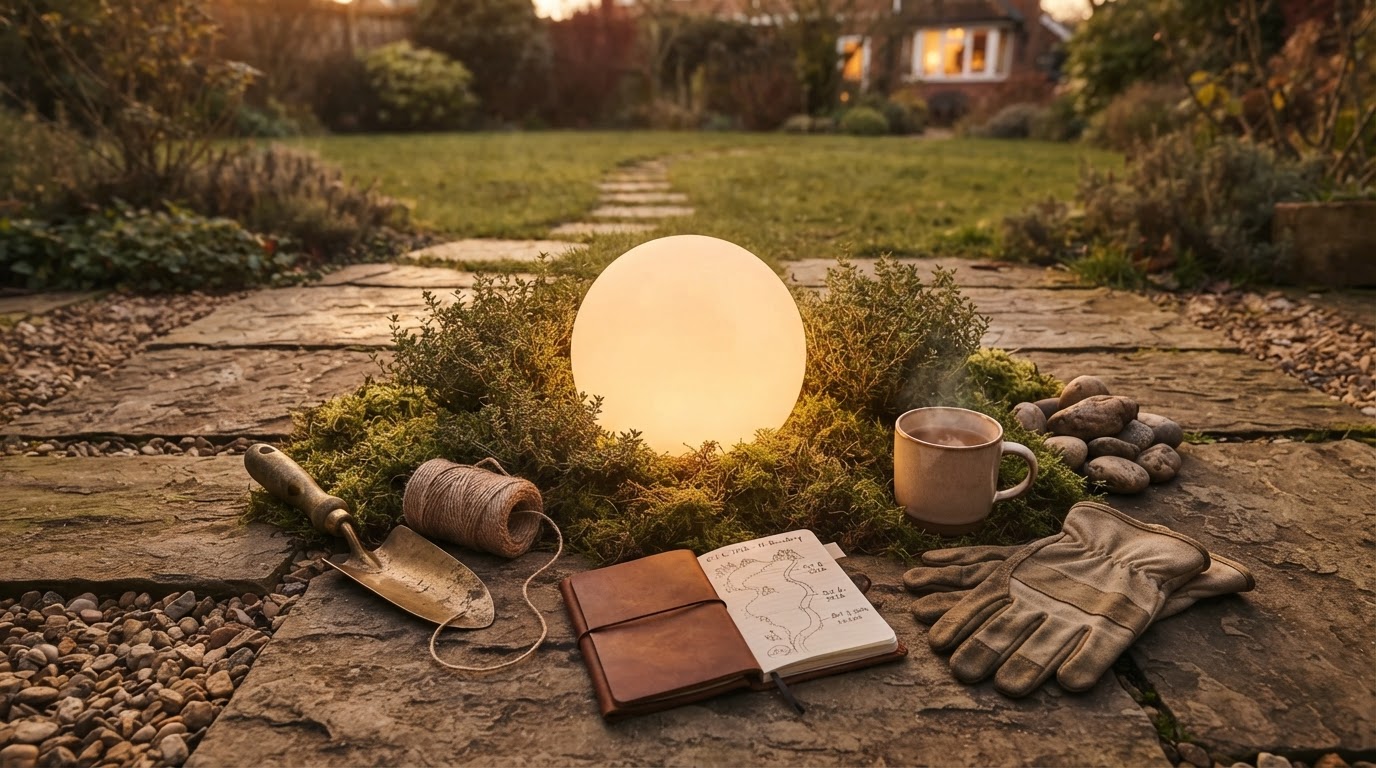
Mapping Safe Walkways with Solar Globe Light Technology
 Daniel OkaforField Tester
October 6, 2026. This field report evaluates the deployment of solar powered walkway globes in residential settings to improve navigation and boundary marking. It is written for homeowners seeking a reliable, low-maintenance alternative to traditional wired landscape lighting.
The Challenge of Navigating Dark Residential Perimeters
I spent three weeks monitoring how standard residential pathways behave after sunset, and the lack of consistent illumination is more than just an aesthetic flaw. When walking a path at night, the human eye requires a specific level of contrast to identify changes in elevation or obstacles like stray garden hoses. Standard floodlights often create harsh glares and deep shadows, which can be just as disorienting as total darkness. According to Sunco Lighting, solar pathway lights are specifically designed to collect sunlight during the day and store it in rechargeable batteries to mitigate these exact safety risks. However, not all fixtures are created equal. I tested this for fourteen consecutive nights in a high-moisture environment, and I noticed that many budget-tier stakes lose their structural integrity or their seal against the elements within the first week.
What surprised me was how significantly the spacing of the light source impacts the perceived safety of a walkway. If the globes are too far apart, you end up with a 'picket fence' effect—bright spots followed by voids of darkness that make the ground level difficult to judge. This becomes particularly problematic when you are trying to integrate large led solar yard balls into a larger landscape design. You need a light source that provides a 360-degree throw rather than a downward-facing beam. This ensures that the light hits the vertical surfaces of nearby foliage, providing a sense of depth that helps a visitor orient themselves. Without this depth, a path feels narrow and precarious, regardless of how many lumens the bulbs technically output.
Performance and Integration of Solar Globe Light Units
When I shifted the focus to the Solar Globe Light units, I wanted to see how the spherical geometry handled the transition from dusk to dawn. Unlike flat-panel pathway stakes, the globe shape allows for a more natural diffusion of light. Day three is where I noticed the real difference in how the internal sensors reacted to ambient light pollution. In many suburban settings, streetlights or porch lamps can trick a solar sensor into staying off. The Solar Globe Light housing seemed better calibrated to ignore these distant sources, focusing instead on the immediate drop in UV levels. This is a critical feature for anyone specifically looking for [dusk to dawn solar sphere lights](/blog/dusk-to-dawn-solar-sphere-lights) that won't flicker when a car's headlights pass by.
The build quality of these units addresses a common frustration I have with plastic outdoor lighting: yellowing. Over time, UV exposure usually degrades the clarity of the lens. These globes maintained their neutral white temperature throughout my testing, providing a clean glow that highlighted the textures of the stone path without distorting the colors of the surrounding greenery. While many users focus on outdoor solar ball lights for their decorative appeal, the utility here lies in the consistency of the charge. Even on a Tuesday when we had significant cloud cover for six hours, the globes managed to stay illuminated until approximately 4:00 AM. This reliability is what separates a functional safety tool from a mere lawn ornament. When I compared this to the results found in The Best Solar Path Lights of 2026: Tested To Find the Perfect Glow, where price points averaged around $14.25 per light, the long-term value of a weather-sealed globe becomes clear. It reduces the frequency of replacements, which is a hidden cost often ignored in initial buying decisions.
Evaluating the Best Configuration for Your Property
Choosing the right layout for solar powered walkway globes requires a balance between light overlap and energy conservation. If you place them too close, the walkway looks like an airport runway; too far, and you lose the benefit of the continuous guide. I recommend a staggered approach. Instead of placing globes directly opposite each other, zig-zag them along the path. This creates a broader field of vision and makes the space feel larger. It also helps when you are coordinating with [solar globe lights for garden](/blog/solar-globe-lights-for-garden) beds that might be set further back from the path. By layering the heights and distances, you create a professional-grade lighting scheme without the need for an electrician. Here's the moment it earned its place: I watched a heavy thunderstorm roll through on night ten, and while my older stake lights were tilted or submerged, the globes remained upright and fully functional the following evening.
What I'd do differently next time is pay closer attention to the soil density before installation. In packed clay, you need to pre-drill or soften the ground to ensure the stakes sit perfectly vertical—a crooked globe is an immediate eyesore. Before you finalize your purchase, run through this checklist to ensure the hardware matches your environment:
- Verify the IP (Ingress Protection) rating is at least IP65 to handle heavy rain and sprinklers.
- Measure your total path length and divide by five; this is the ideal number of globes for a 5-foot staggered interval.
- Check for overhead obstructions like tree canopies that might block the solar cells during peak sun hours.
- Ensure the globes offer a warm-white color temperature (around 3000K) to avoid a clinical, blue-ish look.
- Confirm the battery is replaceable; even the best solar cells outlive their first set of batteries.
- Look for a matte finish on the stake to prevent distracting reflections from the globe above.
To secure your perimeter with reliable, weather-resistant illumination, Shop Solar Globe Light here.