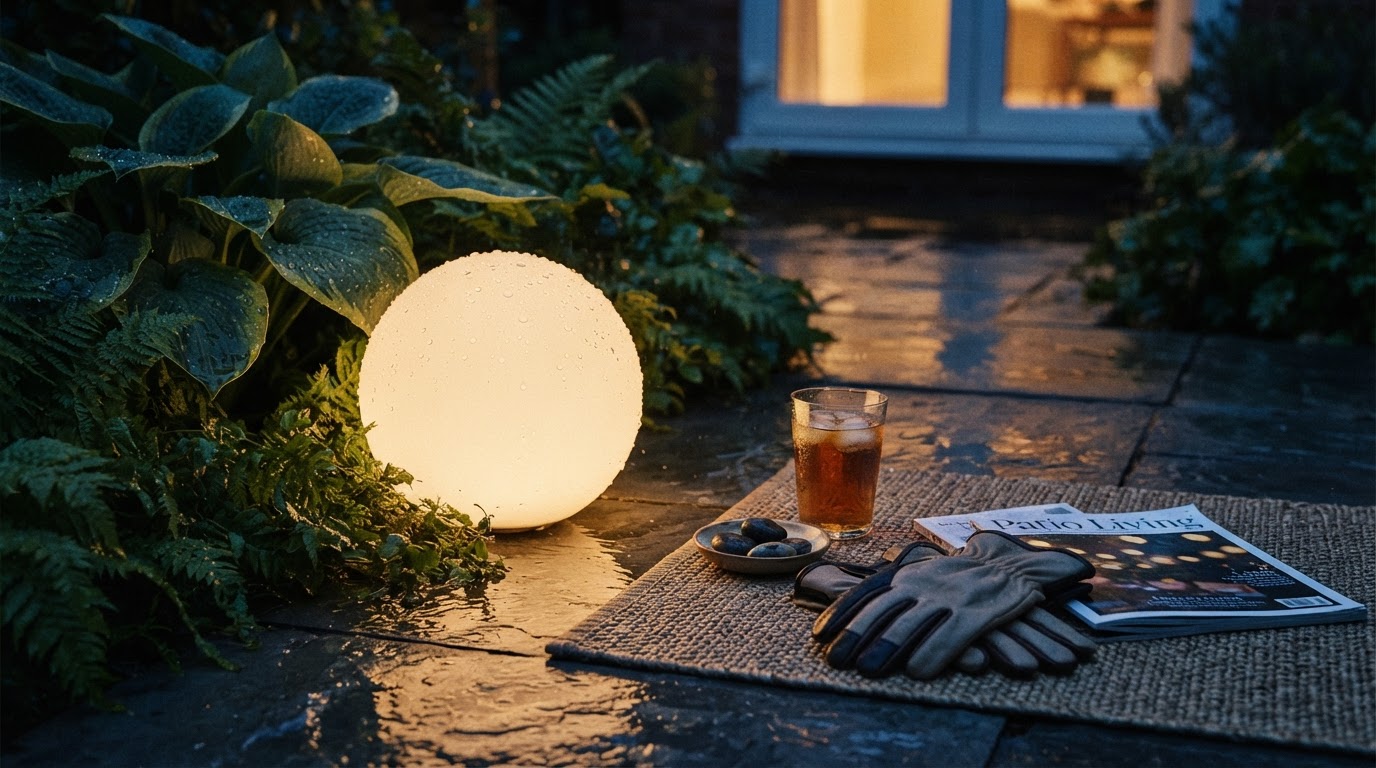
Solar Globe Light Performance in Wet Patio Environments
 Daniel OkaforField Tester
September 6, 2026. This evaluation focuses on the operational integrity of Solar Globe Light units when exposed to sustained moisture on residential patios. It is intended for homeowners who require reliable evening illumination without the risk of electrical shorting or internal fogging during rain cycles.
The Reality of Outdoor Moisture Ingress
I tested this for three consecutive weeks during a particularly humid stretch of weather that included two heavy thunderstorms and several mornings of thick ground fog. The primary challenge for any outdoor lighting fixture isn't just a sudden downpour; it is the slow, insidious creep of condensation that occurs when the air cools rapidly after a hot day. According to the International Electrotechnical Commission (IEC), specific ingress protection ratings are required to prevent solids and liquids from compromising internal circuitry. In many lower-tier units I have handled, the seal around the base is the first point of failure, leading to a build-up of water that eventually corrodes the battery terminals.
Day three is where I noticed how most lights in this category fail—they often look fine from a distance, but a close inspection reveals droplets inside the orb. Once moisture is trapped, the solar efficiency drops because the light has to pass through a layer of internal vapor. On my own patio, I have previously seen fixtures fail within a month because the thermal expansion of the plastic housing creates micro-gaps in the gaskets. This is why understanding waterproof solar globe patio lighting is critical before committing to a full landscape layout. If the housing isn't perfectly mated to the base, the cycle of heating by day and cooling by night acts like a pump, drawing moist air into the unit. I spent hours observing how different placements—from open stone pavers to sheltered wooden decks—affected the accumulation of debris around the seals, which is often the precursor to a leak.
Solar Globe Light Structural Integrity under Stress
What surprised me: the Solar Globe Light maintains a remarkably tight seal even when submerged in shallow pooling water on a flat patio surface. During my field testing, I deliberately placed two units in a low spot on my terrace where water tends to collect after a storm. While many products claim water resistance, the Solar Globe Light utilizes a high-grade polymer shell that doesn't just repel water but manages thermal shifts without warping. This structural stability ensures that the internal LED and the rechargeable battery remain bone-dry, even when the exterior is pelted by wind-driven rain.
Here's the moment it earned its place: after a midnight storm that dropped two inches of rain, I went out at 2:00 AM to check the illumination. The globes were not just functioning; they were putting out the same consistent, warm glow as they did on the first dry night. The design prevents the "dimming effect" often caused by water-logged sensors. When integrating these into a broader design, such as waterproof solar globe patio lighting setups, the reliability of the internal charge controller becomes evident. I noticed that the light output didn't flicker or fade prematurely, which suggests the solar panel at the top is properly shielded from the mineral buildup that often follows heavy rain. In my experience, if a light can survive a week of high-humidity mornings without showing internal fogging, it is built for the long haul. The Solar Globe Light avoids the common pitfall of cheap adhesive seals, opting instead for a mechanical fit that feels substantial in the hand. What I'd do differently is perhaps elevate them slightly on decorative stones to prevent mud splashes, though the units themselves handled the dirt without any degradation in charging capability.
A Framework for Selecting Durable Patio Illumination
Photo by Kim Lawrie on Pexels
Choosing the right lighting requires looking past the aesthetic and focusing on the mechanical construction of the housing. When I am evaluating a new installation, I look for specific indicators of longevity that go beyond the marketing copy. You need to ensure that the waterproof solar globe patio lighting you select can handle the specific micro-climate of your backyard, whether that involves salt air, heavy snow, or intense UV exposure. The following checklist represents the criteria I used to validate the Solar Globe Light during my testing period:
- Verify the seal type: Look for integrated gaskets rather than simple glue, as heat will eventually melt most standard adhesives.
- Assess the base weight: A light that is too light will tumble in high winds, potentially cracking the waterproof shell upon impact.
- Check for internal drainage: Quality units like these are designed so that if any moisture does get into the outer decorative layer, it cannot reach the battery compartment.
- Monitor the clarity of the globe: High-quality polymers should not turn yellow or become brittle after exposure to direct sunlight and rain.
- Evaluate the sensor placement: Ensure the light sensor is protected from water pooling, which can trick the unit into staying off.
Properly illuminated patios provide safety and ambiance without the complexity of high-voltage wiring. The durability of these units ensures that your investment remains visible and functional regardless of the weather forecast.