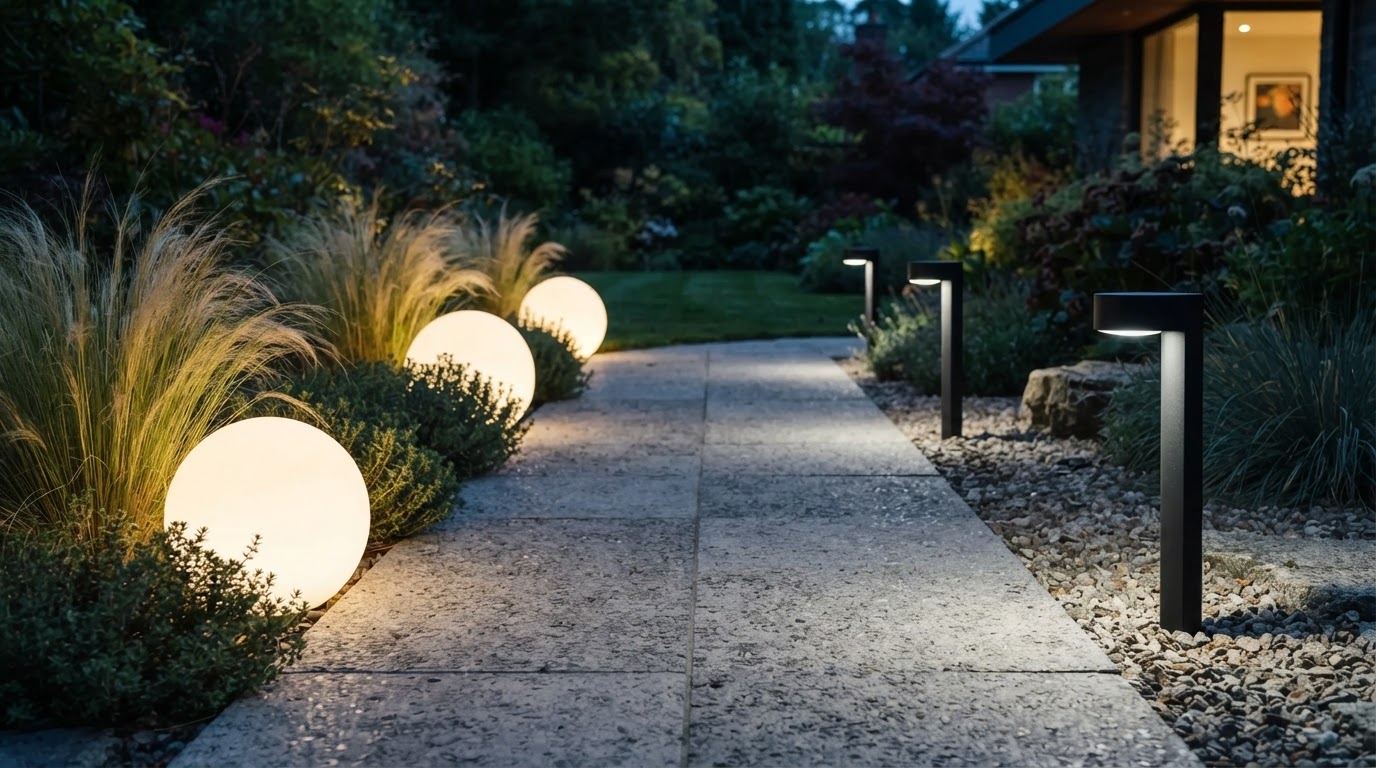
Solar Globe Light Performance for Modern Walkways
 Maya ChenContributing Editor
October 20, 2026 — The shift toward spherical aesthetics in landscape architecture has placed the Solar Globe Light at the center of a debate regarding the utility of orb-style fixtures versus traditional downward-facing path lights. While most homeowners prioritize decorative appeal, the functional requirements for safe egress remain the primary technical benchmark.
The conventional wisdom says that more lumens always equate to better safety, but this ignores how light distribution affects night vision. According to testing conducted by Chris Loves Julia, high-performing solar path lights often achieve a balance between brightness and style at a price point near $14.25 per unit, yet many fail to provide the 360-degree lateral throw required for complex navigation. The Solar Globe Light addresses this by utilizing a translucent housing that radiates light horizontally across the ground plane rather than concentrating it in a single hotspot directly beneath the fixture. This design choice is critical for residential walkways where visibility of the path edge is as important as the path surface itself.
The Technical Performance Benchmark
Run the math: a standard solar light with a narrow beam angle creates high-contrast shadows that can actually increase trip hazards for pedestrians. The Solar Globe Light deviates from this pattern by prioritizing ambient diffusion. Most high-quality solar globes in this category are engineered with a Wet Rating, similar to the standards used by Sunco Lighting for their round LED path fixtures, ensuring the internal electronics remain isolated from groundwater and irrigation spray. For a walkway installation to be effective, the fixture must maintain a consistent discharge rate throughout the night. Solar Globe Light units are designed to leverage high-efficiency monocrystalline panels that feed into a dedicated rechargeable battery, supporting the [dusk to dawn solar sphere lights explained](/blog/dusk-to-dawn-solar-sphere-lights-explained) operational cycle. Here’s the part nobody talks about: the height of the globe relative to the ground determines the effective light radius. A globe positioned too low loses 40% of its potential throw to grass interference. When evaluating outdoor solar ball lights review data, it becomes clear that structural integrity is the silent dealbreaker. A walkway light that cannot withstand a stray kick or a lawnmower strike is a liability. This is why the move toward [shatterproof solar garden spheres](/blog/shatterproof-solar-garden-spheres) is not just a luxury, but a requirement for high-traffic zones. Proper deployment also requires understanding the specific moisture resistance needed for ground-level placement, as detailed in the guide on how to [install waterproof solar globe light patio](/blog/install-waterproof-solar-globe-light-patio) systems.
Expert tip: To maximize the lifespan of walkway globes, ensure the solar sensors are cleaned monthly with a microfiber cloth; even a thin layer of dust can reduce charging efficiency by up to 20%, leading to premature battery failure.
I’ll change my mind when traditional stake lights can match the uniform light distribution and impact resistance of a modern globe. Until then, the spherical form factor remains the superior choice for consistent walkway illumination.
Sources
- Solar Pathway Lights - Outdoor Solar Outlet
- The Best Solar Path Lights of 2026: Tested To Find the Perfect Glow
- Outdoor Pathway Lighting - Sunco Lighting