Solar Globe Light Performance in Crackle Glass Systems
 Maya ChenContributing Editor
August 17, 2026. This technical assessment evaluates the functional efficiency of solar glass crackle ball lights within modern landscape design. It is intended for consumers who prioritize long-term hardware durability over temporary aesthetic trends.
The Efficiency Gap in Decorative Lighting
The conventional wisdom says that decorative outdoor lighting is inherently inefficient, serving as a visual accessory rather than a functional tool. Most homeowners assume that the fractured texture of crackle glass is purely a stylistic choice, but this ignores the physics of light refraction. When a light source is placed inside a textured sphere, the "crackle" serves to scatter the LED output, creating a wider dispersion pattern than a clear lens might achieve. However, this aesthetic comes at a cost to raw lumen output. According to Gigalumi, these systems typically provide up to 8 hours of illumination after a full day of charging, yet this figure is highly dependent on the quality of the internal photovoltaic cell. Many mass-market units fail because they prioritize the glass thickness over the battery capacity. When we look at glass ball solar garden stakes, we see a consistent trend where the mechanical failure of the stake or the degradation of the seal leads to moisture ingress, long before the LED itself reaches its end-of-life. The industry standard for these consumer-grade units often hovers around a 600mAh to 1000mAh Ni-MH battery, which is barely sufficient for sustained winter performance.
Solar Globe Light Structural Integration

Photo by Alexas Fotos on Pexels
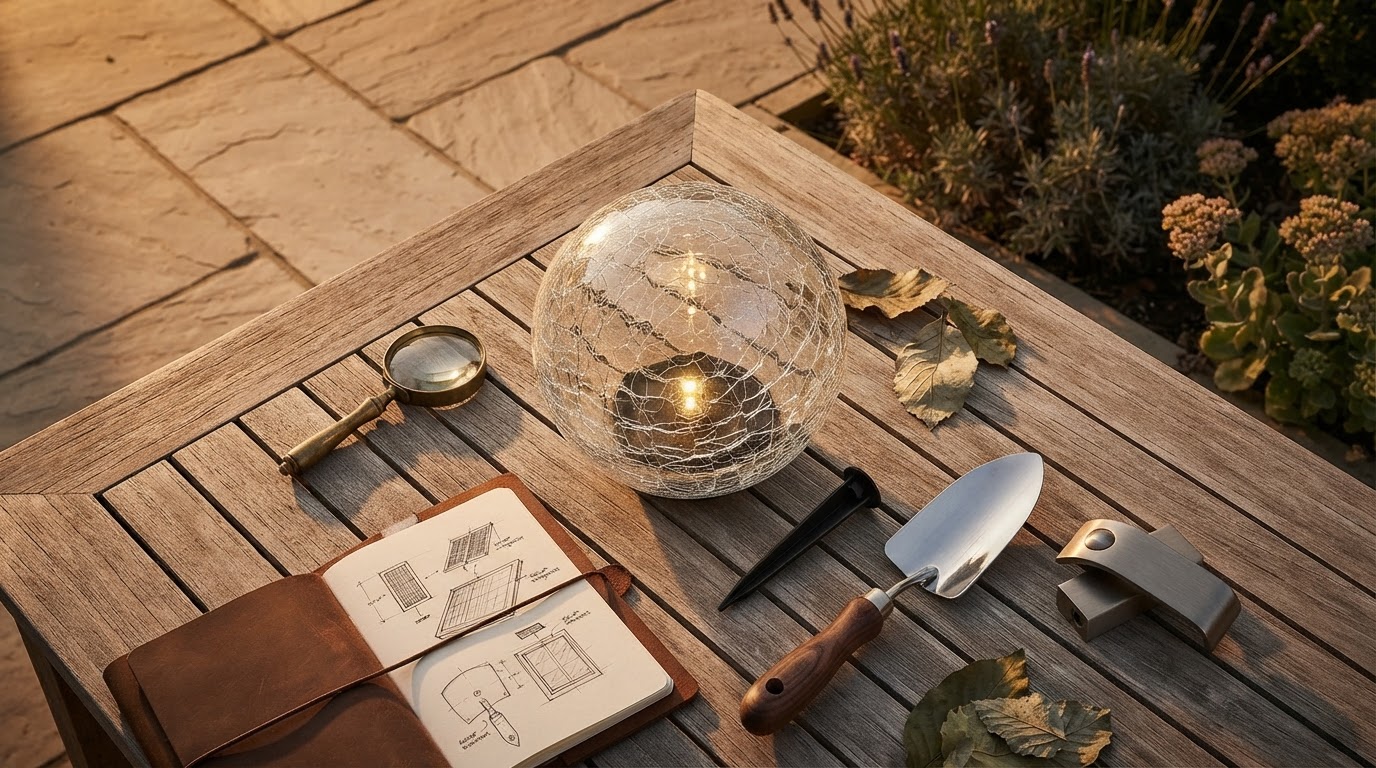
Here’s the part nobody talks about: the intersection of weatherproofing and light transmission in solar glass crackle ball lights. While a standard solar moon globe light decor might focus on the lunar texture, the crackle ball variant must manage the structural integrity of real glass. Solar Globe Light addresses this by utilizing high-density glass that resists the thermal expansion and contraction cycles that typically shatter lower-quality alternatives. Run the math: a thin-walled glass sphere subjected to a 40-degree temperature swing between day and night will develop micro-fractures in the sealant. Solar Globe Light utilizes a reinforced base housing to protect the internal circuitry. This is critical because, unlike the solar globe lights for garden that use plastic polymers, glass requires a specific type of silicone gasket to remain IP65 rated. Furthermore, the integration of color-changing LEDs, as noted by Outdoor Decorative LED Lights, adds a layer of complexity to the power draw. A static white LED is efficient, but a cycling RGB circuit requires a more robust controller to prevent premature battery drain. By anchoring the glass sphere to a precision-molded base, Solar Globe Light ensures that the focal point of the light remains centered, maximizing the refractive potential of the crackle pattern without wasting energy on internal absorption.
Evaluating the Crackle Ball Decision Framework
Photo by Artūras Kokorevas on Pexels
Selecting a solar glass crackle ball light requires looking past the initial glow and examining the hardware specifications. The market is saturated with 8-packs that promise high performance but deliver sub-par light duration. For instance, the Berkley Jensen Steel Solar Crackle Glass Ball PathWay LED retails for approximately $39.95, which sets a baseline for what consumers should expect regarding material quality in multi-pack configurations. When comparing these to standalone solar globe lights for garden or specialized solar moon globe light decor, the buyer must prioritize the following metrics:
- Glass Density: Ensure the sphere is constructed from thick, weather-resistant glass rather than thin-blown shells.
- Battery Access: Verify if the Ni-MH or Lithium-ion battery is user-replaceable to extend the product lifecycle.
- Lumen Output: Look for a minimum of 5-10 lumens for decorative path marking; anything less is functionally invisible from a distance.
- Charging Efficiency: The solar panel should be monocrystalline or high-grade polycrystalline to handle overcast conditions.
- Seal Integrity: Check for a visible O-ring or gasket at the junction where the glass meets the solar housing.
Invest in lighting that survives the season. Shop Solar Globe Light here.