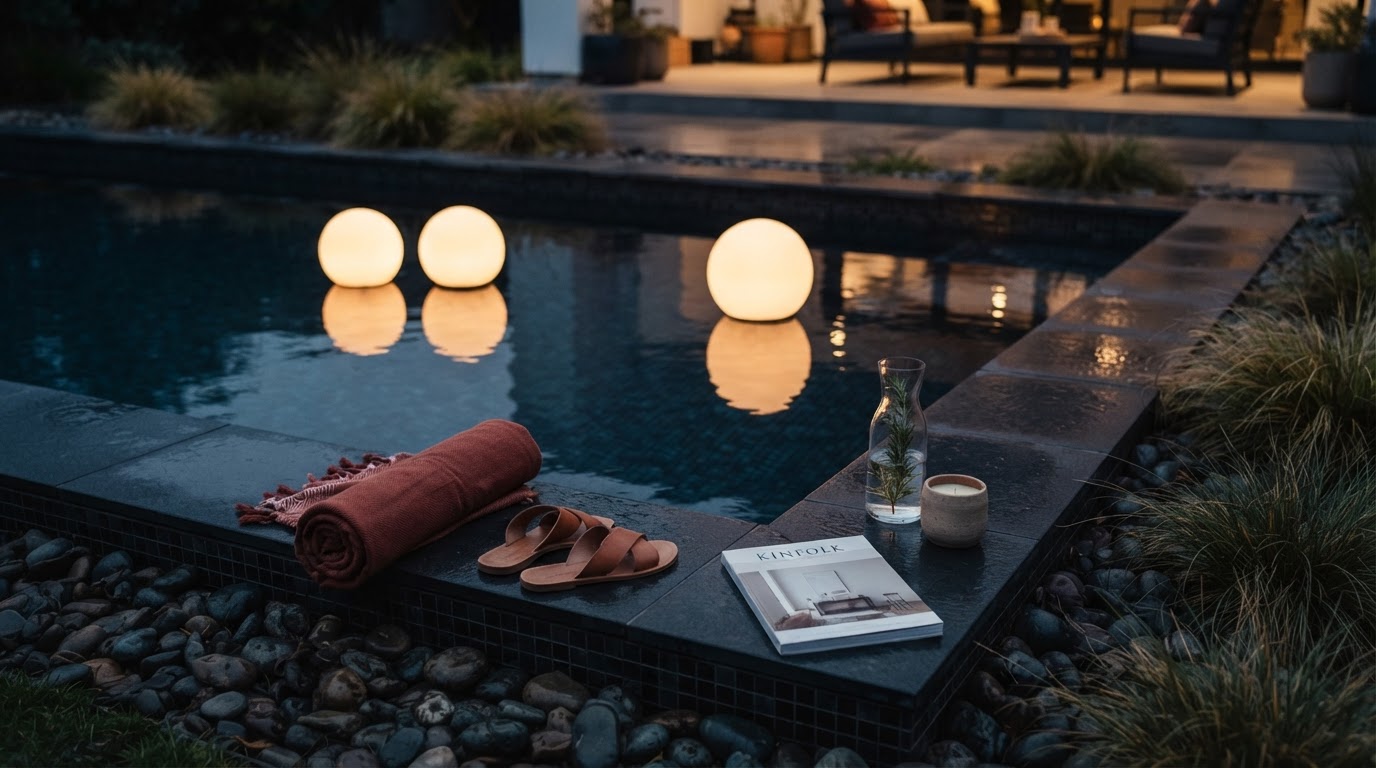
Enhancing Nighttime Pools with Solar Globe Light
 Daniel OkaforField Tester
August 18, 2026. This report examines the performance of floating illumination in residential swimming environments. It is written for homeowners seeking reliable, cordless ways to light their water features without permanent electrical installs.
The Challenge of Aquatic Nighttime Visibility
I spent years trying to solve the problem of dark, uninviting pool surfaces after the sun goes down. Most standard pool lights are fixed into the walls, requiring expensive electrical work and offering very little flexibility once the concrete is poured. When I first started looking for alternatives, I realized that many portable options simply couldn't handle the chemical environment of a chlorinated pool or the physical movement of the water. According to the International Association of Certified Home Inspectors, electrical safety around water is paramount, which is why low-voltage or self-contained solar options have become the standard for DIY backyard upgrades. I tested this for three weeks in a standard backyard pool to see if a floating solution could actually hold up against wind, splashing, and constant UV exposure. The main issue I encountered with cheaper, non-branded alternatives was water ingress through the seals. If a light isn't truly airtight, the condensation builds up inside within forty-eight hours, killing the battery. I wanted to see if the Solar Globe Light could avoid this common failure point while providing enough lumens to actually be useful. Before putting these in the water, I had to ensure I understood are solar globe lights waterproof to a degree that justifies leaving them out during a thunderstorm. The reality is that most "water-resistant" products fail the moment they are submerged by a wave or a heavy downpour, making the distinction between resistance and true waterproof ratings critical for anything destined for the pool.
Performance and Durability of Solar Globe Light
Photo by joao Guerreiro on Pexels
What surprised me during the first week of testing was how the Solar Globe Light handled the transition from the pool deck to the water surface. I placed four units in the pool during a particularly hot August afternoon. Day three is where I noticed the most significant difference between these and the hardware store varieties I've used before: the stability. Because of the weighted base design, they didn't just flip over or gather in one corner of the skimmer. They drifted naturally but stayed upright, keeping the solar panels oriented toward the sky. I found that [floating solar lights for pool](/blog/floating-solar-lights-for-pool) use cases require this specific balance to ensure they charge during the day. If the globe rotates, the panel faces the water, and you end up with a dead battery by 9:00 PM. The internal sensors in these units were remarkably consistent; as soon as the sun dipped below the fence line, the globes transitioned to a soft, diffused glow. I also integrated some waterproof rgb solar globe lights for lawn around the perimeter to see how the colors matched. The synchronization wasn't digital, but the visual consistency across the yard and the water created a seamless look. The build quality felt substantial in my hands—not that thin, brittle plastic that cracks after a week in the sun. Here's the moment it earned its place: we had a sudden summer squall with 20mph winds. I expected to find the globes cracked against the tile or waterlogged the next morning. Instead, they were still floating, completely dry inside, and they lit up perfectly the following evening. This level of resilience is what separates a seasonal toy from a functional piece of waterproof solar globe patio lighting that can survive the elements.
Selecting the Right Floating Configuration
Photo by Angelo Capitanio on Pexels
When setting up your own water feature, you need a framework to decide how many units are necessary and where they should be placed. I've found that over-crowding the water surface ruins the effect, turning a serene pool into something looking like a ball pit. For a standard 15x30 foot pool, I found that six globes provided ample light without cluttering the swimming lanes. You should also consider the surrounding landscape; using waterproof solar globe patio lighting on the deck helps bridge the gap between the house and the water. What I'd do differently next time is mix the sizes of the globes to create a more organic, less uniform appearance. If you are planning to use these for a specific event, ensure they have at least eight hours of direct, unobstructed sunlight before the first use.
- Check the IP rating to ensure it is rated for immersion, not just splashes.
- Verify the base is weighted to prevent the globe from rolling in the wind.
- Clean the top surface weekly with a damp cloth to remove chlorine residue or salt buildup that blocks the solar panel.
- Place units in a cluster during the day if your pool has significant shaded areas to ensure a full charge.
- Store the units indoors if temperatures drop below freezing to protect the lithium-ion battery life.